
Lincoln County Criminal Court Cases
Lincoln County criminal court cases are divided by court function. Circuit Court is West Virginia's general-jurisdiction trial court of record. It hears all felonies, certain misdemeanors, and appeals from magistrate or municipal courts. Magistrate Court hears misdemeanors, issues and records complaints and warrants, sets bail, takes proposed pleas, and conducts preliminary felony examinations. A felony can therefore leave one Lincoln County case trail in Magistrate Court before a later indictment creates a separate Circuit Court file.
Both offices work through the Lincoln County Courthouse in Hamlin, yet their files do not merge. The Magistrate Clerk holds the complaint-stage documents. Circuit Clerk William J. Stevens keeps the indictment, pleadings, motions, subpoenas, docket, verdict or plea, and judgment. No distinct current municipal docket was verified for Hamlin or West Hamlin. A person with a town citation should confirm the issuing court with the town and the Lincoln Magistrate Clerk.
The West Virginia Judiciary's Lincoln court listing identifies the judges and court contacts. Its published view helps explain which office serves a Lincoln County criminal case. The Lincoln filing still belongs with the Lincoln clerk even when a judge's chambers are outside the county.
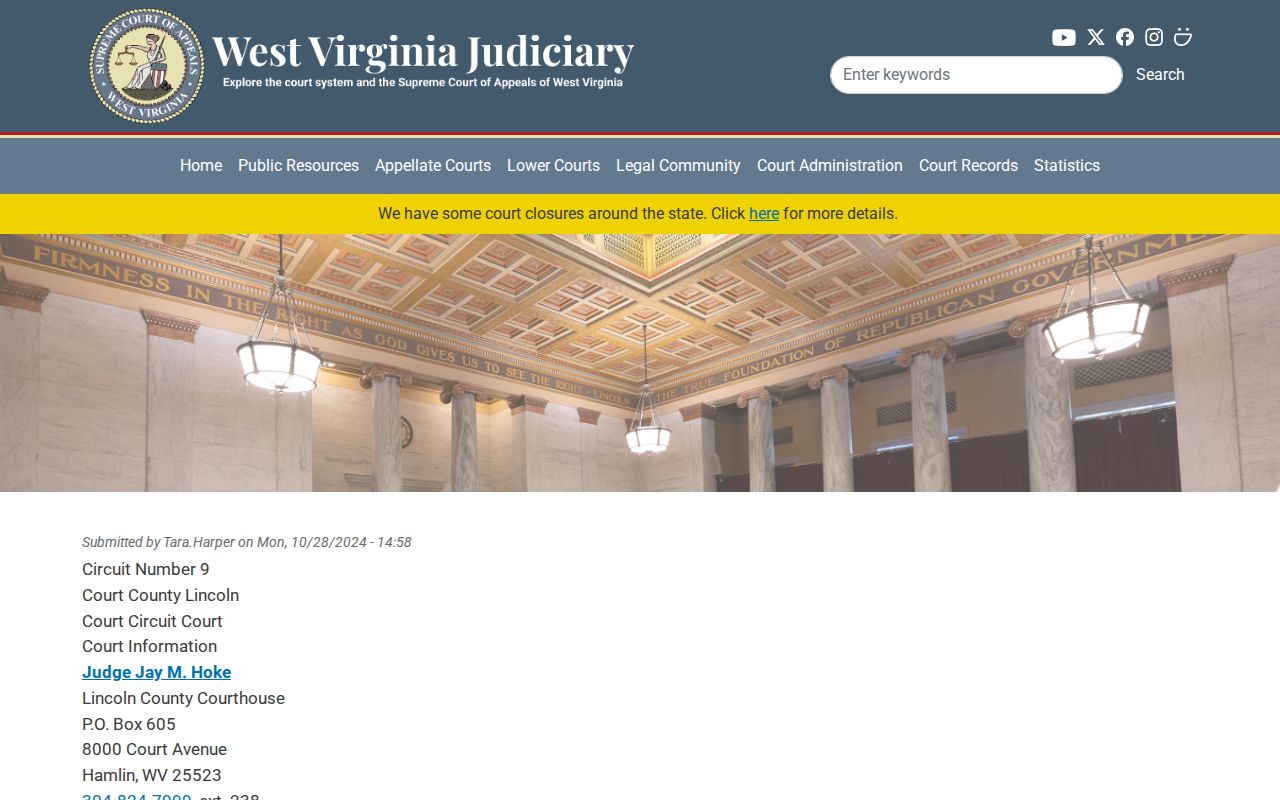
The court listing is a contact source, not an online circuit docket or substitute for the filed order.
Lincoln County Court File Split
The easiest way to pick a custodian is to ask what stage produced the paper. A complaint, warrant, first appearance, bond ruling, or preliminary examination points to Magistrate Court. A true bill, indictment, felony arraignment, circuit motion, plea order, trial verdict, or sentencing order points to Circuit Court. Appeals from a Lincoln magistrate decision also move to Circuit Court. This split matters because the free statewide index is limited to magistrate cases.
| Court or office | Lincoln County case role | Contact |
|---|---|---|
| Circuit Court and Clerk | Felonies, some misdemeanors, appeals, and the full circuit file | 8000 Court Avenue, P.O. Box 338, Hamlin, WV 25523; 304-824-7999 ext. 256 or 269 |
| Magistrate Court | Misdemeanors, complaints, warrants, bail, and felony preliminary matters | P.O. Box 573, Hamlin, WV 25523; 304-824-7990 ext. 235 |
| Prosecuting Attorney | Presents charges and felony matters, but does not keep every court file | P.O. Box 685, Hamlin, WV 25523; 304-824-7990 ext. 248 |
The court named on the paper controls the next step. Using that label first avoids ordering a magistrate complaint from the Circuit Clerk or asking the prosecutor for a clerk-certified judgment.
Searching Lincoln County Case Records
Begin with the West Virginia Judiciary Magistrate Record Search. It is free and accepts a first name, last name, or case number. The public tool returns no more than 30 records and does not provide document images. Save the county and exact case number from any likely result. A case number is the best key when requesting the complaint and final order, and it also helps the Circuit Clerk check for a linked indictment.
- Search the magistrate index by legal name. Use the exact case number when it is known.
- Confirm that the result is filed in Lincoln County. Record its case number, type, status, and displayed dates.
- Ask the Lincoln Magistrate Clerk for the complaint, probable-cause papers, bond order, and final magistrate order.
- Ask the Lincoln Circuit Clerk whether the matter produced an indictment, appeal, or other circuit file.
- Inspect the circuit docket and final sentencing, acquittal, or dismissal order. Request a certified copy when proof of the outcome is needed.
The search fields are narrow. The interface does not promise wildcard search, bulk export, a fixed historical start date, or real-time updates.
| Field label | Type | Required | Use |
|---|---|---|---|
| First Name | Text | Not individually specified | Enter a legal first name to narrow a common surname. |
| Last Name | Text | Not individually specified | Try the legal spelling and each known name variant separately. |
| Case Number | Text | Alternative | Use it when known to avoid common-name ambiguity. |
| County | Filter | Unspecified | Choose or confirm Lincoln County in the workflow and results. |
| Search or Reset | Control | No | Submit the query or clear fields before a new search. |
Note: A magistrate index hit identifies a lead; only the filed complaint and final order show the full Lincoln County court result.
Lincoln Case Search Result Limit
A broad name search can stop at 30 results. That cap can hide the right Lincoln County criminal case among common names or records from other counties. Add a first name, check the spelling, and use a case number as soon as one appears. If the name still yields nothing, the absence does not prove there is no court file. The matter may be in Circuit Court, filed under a name variant, located in another county, restricted, or expunged.
No public statewide online docket and document system for Lincoln circuit criminal cases was located. When the search does not answer the question, call the clerk. Ask whether staff can locate a file by name, approximate filing year, and magistrate case number. Older papers and archived exhibits may require more time. The county clerk says circuit files are kept essentially forever, but lawful sealing and the survival of much older records still control what can be seen.
Inside a Lincoln County Case File
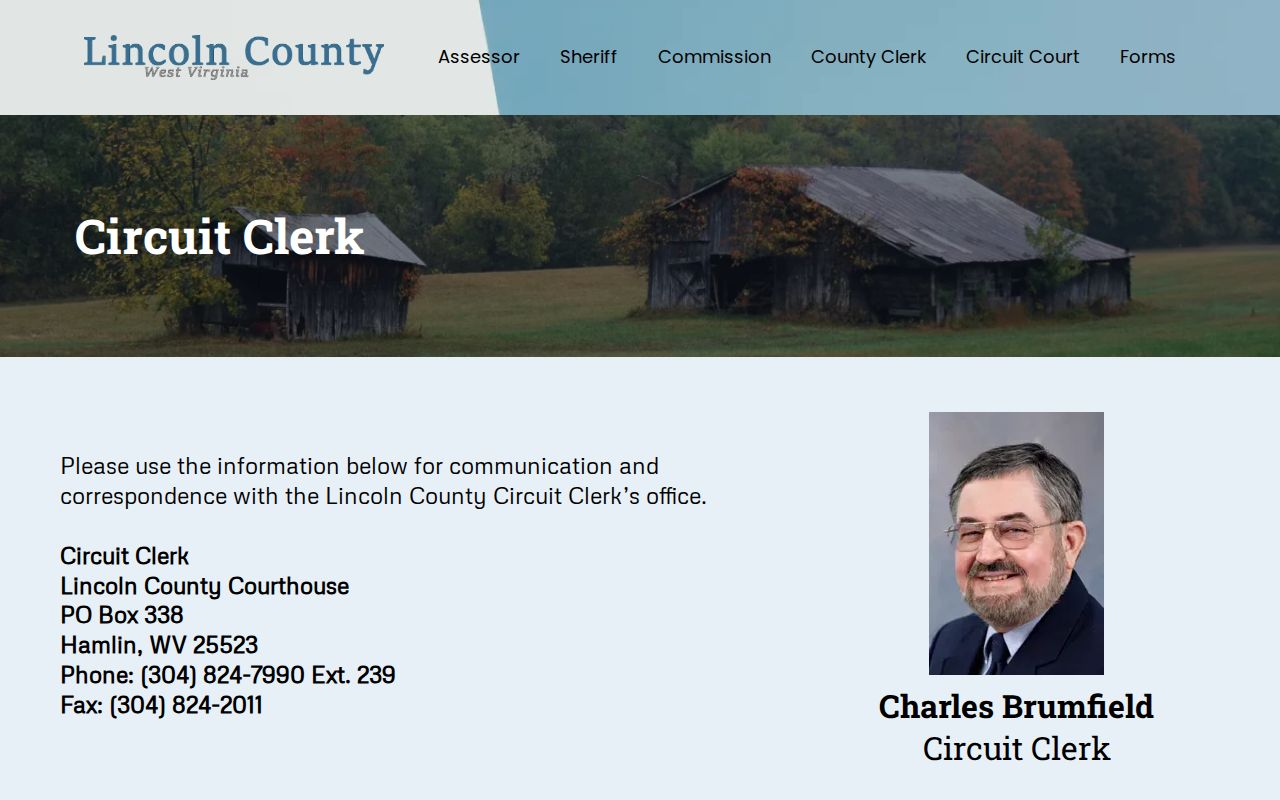
A Lincoln County criminal case file is document-centered. It records how a charge entered court, what each side filed, what the judge decided, and how the case ended. The Lincoln County Circuit Clerk page describes indictments, pleadings, motions, subpoenas, evidence records, jury instructions, verdicts, and other key filings. Not every item is open. Personal identifiers, victim or minor information, sealed material, and sensitive exhibits can be removed or restricted.
The clerk's page is also the official source for who controls those files and how public inspection works.
The useful goal is usually the disposition and its signed order, not a bare name match. West Virginia penalties are offense-specific: §61-11-16 addresses certain felony sentences, while §61-11-17 addresses misdemeanor imprisonment and fines within the charged offense's limits.
| Case number and court | Identifies the court, county, and exact file used for copy or certification requests. |
|---|---|
| Charging document | The magistrate complaint or circuit indictment lists counts and statutory citations as filed. |
| Docket entries | A dated index of motions, hearings, orders, plea events, trial steps, and appeal activity. |
| Appearances and judge | Shows the prosecutor, defense appearance, and judicial officer tied to the case. |
| Disposition and judgment | Records dismissal, acquittal, plea, verdict, or another formal case outcome. |
| Sentence and conditions | May state confinement, probation, costs, fines, restitution, and other ordered terms. |
Lincoln County Indictment Terms
A true bill is the grand jury's formal decision to indict. It begins the circuit indictment case, but it is an accusation, not a conviction. A no bill means the grand jury did not indict on that submission. The Lincoln County law-enforcement account adds a local point that can trip up readers: a magistrate's probable-cause dismissal does not prevent the prosecutor from later presenting a felony allegation to a grand jury.
- Complaint
- The charging paper that commonly starts a magistrate criminal case.
- Preliminary examination
- The magistrate-stage test of probable cause in a felony matter.
- Indictment
- The grand jury's formal felony accusation, also called a true bill.
- Docket
- The dated index of filings, court events, and orders.
- Disposition
- The formal way a charge ended, such as conviction, dismissal, or acquittal.
A booking charge may also change before indictment. Read the complaint, indictment, and final order side by side rather than treating the first label as permanent.
How a Criminal Case Moves
A Lincoln County felony can start with an investigation, a warrant, or an arrest. The Lincoln County Sheriff's Office may hold the first agency report, while the court clerks hold the case papers. Magistrate Court then records the complaint and initial appearance, addresses counsel and bail, and holds a preliminary examination unless it is waived. The prosecutor may present the allegation to a grand jury. A true bill opens the Circuit Court case. Arraignment, discovery, motions, and hearings lead toward dismissal, a plea, or trial. If the result is a conviction, the court enters a sentence.
Case flow: Charges Filed › Arraignment › Pretrial › Plea or Trial › Disposition › Sentencing
Magistrate appeals go to Circuit Court. Circuit criminal appeals follow the route to the Supreme Court of Appeals fixed by West Virginia law. Each step can add a new order, so the latest docket entry is not always the final case outcome.
Lincoln Circuit Files Offline
When no Lincoln County circuit result is online, contact Circuit Clerk William J. Stevens at 8000 Court Avenue, P.O. Box 338, Hamlin, WV 25523. The Judiciary lists 304-824-7999 extensions 256 and 269; the county directory has also shown another extension, so use the courthouse's central route if one fails. County public hours are Monday through Friday, 9:00 a.m. to 4:30 p.m. Ask about inspection, paper copies, and certification before visiting because Lincoln-specific copy fees and terminal access were not published.
Lincoln County Circuit Clerk
William J. Stevens
8000 Court Avenue, P.O. Box 338
Hamlin, WV 25523
304-824-7999 ext. 256 or 269
County hours: weekdays, 9:00 a.m. to 4:30 p.m.
The official forms library can help when a court filing is required. The West Virginia Judiciary court forms page includes statewide forms, including expungement materials.
Forms do not replace a certified complaint, indictment, or final order from the Lincoln clerk.
Lincoln County Prosecutor Case Role
West Virginia uses the title Prosecuting Attorney. The Lincoln County office decides what to charge and what felony matters to present, then appears for the state in criminal cases. It is not the custodian of every court file. Requests for filed indictments, motions, plea orders, and judgments still belong with the clerk. This distinction avoids sending a copy request to the office that litigated the matter instead of the office that keeps the record.
The official Lincoln County Prosecuting Attorney page lists the office and staff.
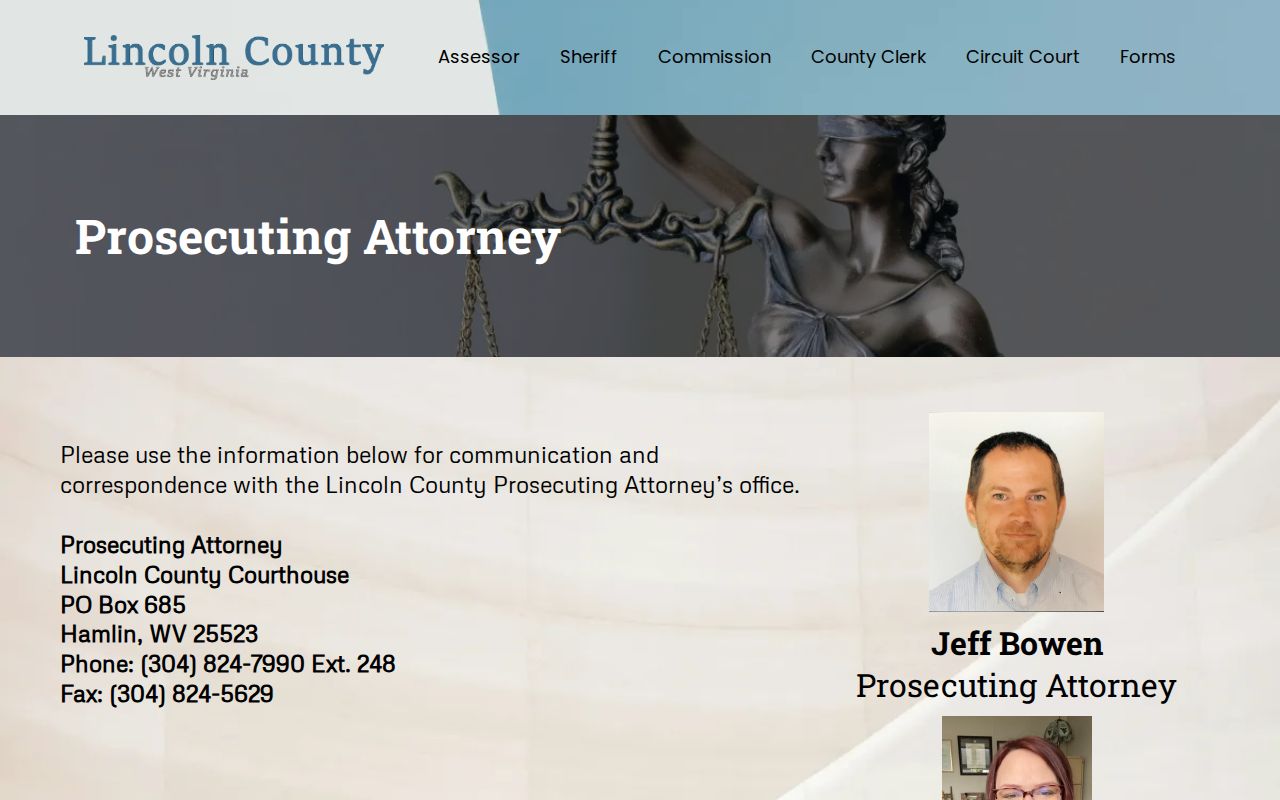
Use that office for its prosecutorial role, while directing court-record orders to the Magistrate or Circuit Clerk.
Case Record Access & Restrictions
West Virginia law generally supports inspection of nonexempt public records. W. Va. Code §51-4-1a addresses clerk records and access practice. The West Virginia Freedom of Information Act also provides a route for a reasonably specific request to a custodian. Neither route overrides a sealing order, juvenile confidentiality, victim protections, or a lawful exemption. An office may redact protected facts instead of releasing a full unedited copy.
A missing online Lincoln County criminal case is not necessarily sealed. Circuit records are generally clerk-based even when public. If a matter was dismissed, the dismissal does not erase it by itself. Qualifying acquittals, dismissals, diversion, or deferred matters may require a petition under §61-11-25. Certain eligible convictions use §61-11-26. Ask the clerk about the case status and obtain the signed final order before drawing a conclusion.
The filed court outcome can also clarify an earlier custody entry. For that prior step, use the county's Lincoln County arrest lookup channels and match the booking to the court case number.